Architecture


What a city represents, historically, is the desire to replicate Creation itself; the act of forming closed order from infinite chaos. It can be inferred therefore that the language of architecture itself, the orders, the trimmings, the ornamental filigree at the joints, has divine origins. Given the reciprocal relationship with nature on which the city resides and given that being extends into a contingent architectural order, the sacred source of its component parts is a logical proposition.

The possibility of creating beautiful buildings rests in the eloquent use of this language in the composition of the built form, shape and decor.

A work of Architecture is an embodiment of a prediction of a type of imagined future on the part of its builders. Philosophers would say that an architect is an expert in contingency. The prediction defines a plan of fixed structural materials and fittings. It thus imposes a permanent look influenced by the conventions of the particular time in which the plan is made. This is what is meant when people relate the idea of space with the idea of time.

As such, philosophically speaking, after existence comes architecture, so the question is; can just anyone be an architect and who has the power to say one is all right to build and the other not? It is a moot point but according to existentialist theory existence comes before essence so at the least in the physical world, architecture pertains to the parts that make up essence. So architecture is lived in as an essential of the collective. As such it would be a logical fallacy to suggest that an individual human mind is able to assume that an individualistic idea will please others. So at least in speech we use language. Unable to decide how to build in a way to please all, we find ourselves out of sheer necessity having to appeal to something greater than us collectively, perhaps appealing for a visual as well as aural lauguage. In the past we have always behaved as though that appeal, or perhaps the prayer, was answered by the plethora of icons and symbols of beauty ensued suitable for use, as linguistic particles, in architectural compositions. There is in nature the question of the legitimacy of power because you must have the power to assert your own wish over others. By what right? Perhaps by some divine right. Is this not behind the argument that a throne is only valid if it is thus blessed by divine power? Is this not the actual argument behind the maintenance of the monarchy, apart from the apparent convenience of traditional continuity?

Modern Architecture has been foisted on the world with all it innate psychological pathologies intact- The deceit explains the horror and offence. Everyone has fallen for it without questioning even a single one of its many logical fallacies on which the justifications for the ugliness are based. And the question remains about who even authorised modernism. "Well..., it's something that just happened... er... as if by some common consent.", the apologist ,who would overlook murder if it fitted the theory, said. No, no great human folly ever needed the approval of parliament.

How many types of imagined futures can there be such that the results may please everyone? The answer cannot be an infinite number and yet today, absurd ideas of misguided individual designers are permitted to be lined up as though the city street were merely a catwalk in a fashion parade. The defenders of modernism, in hushed choir voices, say that each work is an original. The defender forgets that our embodied senses are biological faculties bound to nature. The synthetic future has a certain look and neither kings nor the common man has had any say whether massive buildings made of steel, glass and concrete provides a vision of life which is in anyway tolerable. Pure form for Plato was merely a thought and Aristotle thought his rival crazy even for 'having' such thoughts. Yet, the psychopath boldly presumes to be sure with such deadly certainty that only such a clinical aesthetic must shape the ideal society. In the long term, given entropy and the human propensity for neglect, it is an unattainable goal. The tyranny of Modern Architecture is the punishment that even Cain could not bear; the programmatic erasing of common sense by dimming the perceptive powers.

Architecture is a living pattern of symbolic representations that surrounds every human activity. It is the theatre of being. If pleasure of living is the purpose then it is such by nature's grace. With such truisms replicated as ornaments on a building's wall, we would hope that the feelings are pleased, from every point of view.

We are interested in how buildings ought to be assembled but much more, we are interested in the qualities of living that the buildings will trace and imbue. In the much needed restoration of civic order, there is much innate understanding to recognise and recover by builders and users alike.

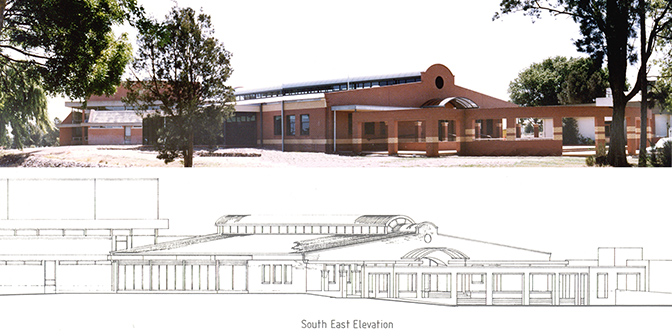
We at Paik Associates practice architecture as an exercise in logic. We trust in the past examples of what works because that is all we can know and in architecture, it is best to proceed with as much certainty as possible. Architectural design as an activity is a series of critical decision making. Things fail most unexpectedly at that level of how ideas originated. and choosing the best method to attain the desired outcome, in as much as certain parameters to do with lifestyle can actually be pre-determined. Realism - the understanding that truth is what happens, not what is wished for, is key to successful projects. How can we predict what might happen? Through experience! So the past must be seen as part of the dynamic of the present. Some aspects of the past remain gifts for today and today is certainly yesterday's future. We can certainly discern the difference between wrong and right, at least, with hindsight. So critical look at past examples to us is fundamentally our working method.

To quote Keats:

"A thing of beauty is a joy forever.
Truth is beauty and beauty truth."

We are an architectural practice since 1988, first in Australia, then based in Italy since 1994.